Ƶ

Healthcare Innovation Stories

AAHKS Digital Health Committee Discusses Patient Engagement

December 4, 2018
By
alan

The (AAHKS) recently shared a that showcases Ƶ, regarding patient engagement platforms and their ability to "implement the triple aim of healthcare: improve health outcomes of patient and population, improve patient experience, and lower cost" (Stiefel 2012).The full highlights the difference between Patient Engagement and Patient Experience, explains How to Engage the patient in 2018/2019, Why Use Patient Engagement Platforms, and draws specific examples of How patient engagement technologies such as Ƶ can improve health outcomes, improve patients' experience, and lower costs..About ƵƵ enables health systems to elevate the patient experience, improve health outcomes, and lower costs through innovative patient technology. Patients are kept on track with care plans using an App (accessible on their phone, tablet, and/or computer) which guides them from preparation through recovery with reminders, tasks, multimedia education, progress-tracking and surveys which allows you to collect real-time patient-reported outcome data such as ERAS compliance, intervene sooner for patients at-risk, and drive quality improvement across the organization. Research completed by academic medical centers has shown Ƶ to reduce hospital length of stay, readmissions, ER visits, and costs. For more information, please visit:
AAHKS Digital Health Committee Discusses Patient Engagement

Posted by:
alan
on
December 4, 2018

The (AAHKS) recently shared a that showcases Ƶ, regarding patient engagement platforms and their ability to "implement the triple aim of healthcare: improve health outcomes of patient and population, improve patient experience, and lower cost" (Stiefel 2012).The full highlights the difference between Patient Engagement and Patient Experience, explains How to Engage the patient in 2018/2019, Why Use Patient Engagement Platforms, and draws specific examples of How patient engagement technologies such as Ƶ can improve health outcomes, improve patients' experience, and lower costs..About ƵƵ enables health systems to elevate the patient experience, improve health outcomes, and lower costs through innovative patient technology. Patients are kept on track with care plans using an App (accessible on their phone, tablet, and/or computer) which guides them from preparation through recovery with reminders, tasks, multimedia education, progress-tracking and surveys which allows you to collect real-time patient-reported outcome data such as ERAS compliance, intervene sooner for patients at-risk, and drive quality improvement across the organization. Research completed by academic medical centers has shown Ƶ to reduce hospital length of stay, readmissions, ER visits, and costs. For more information, please visit:

Recent news from Ƶ

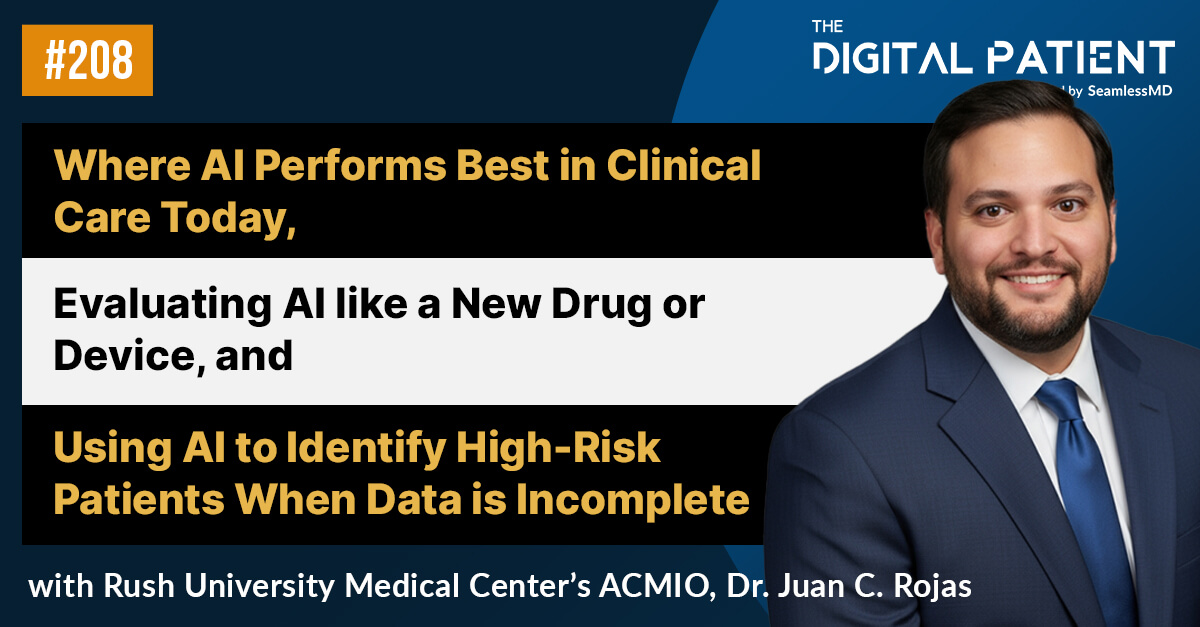
TDP 208: Rush University Medical Center’s ACMIO Dr. Juan C. Rojas: Where AI Performs Best in Clinical Care Today, Evaluating AI like a New Drug or Device, and Using AI to Identify High-Risk Patients When Data is Incomplete
December 16, 2025

TDP 208: Rush University Medical Center’s ACMIO Dr. Juan C. Rojas: Where AI Performs Best in Clinical Care Today, Evaluating AI like a New Drug or Device, and Using AI to Identify High-Risk Patients When Data is Incomplete

Learn More
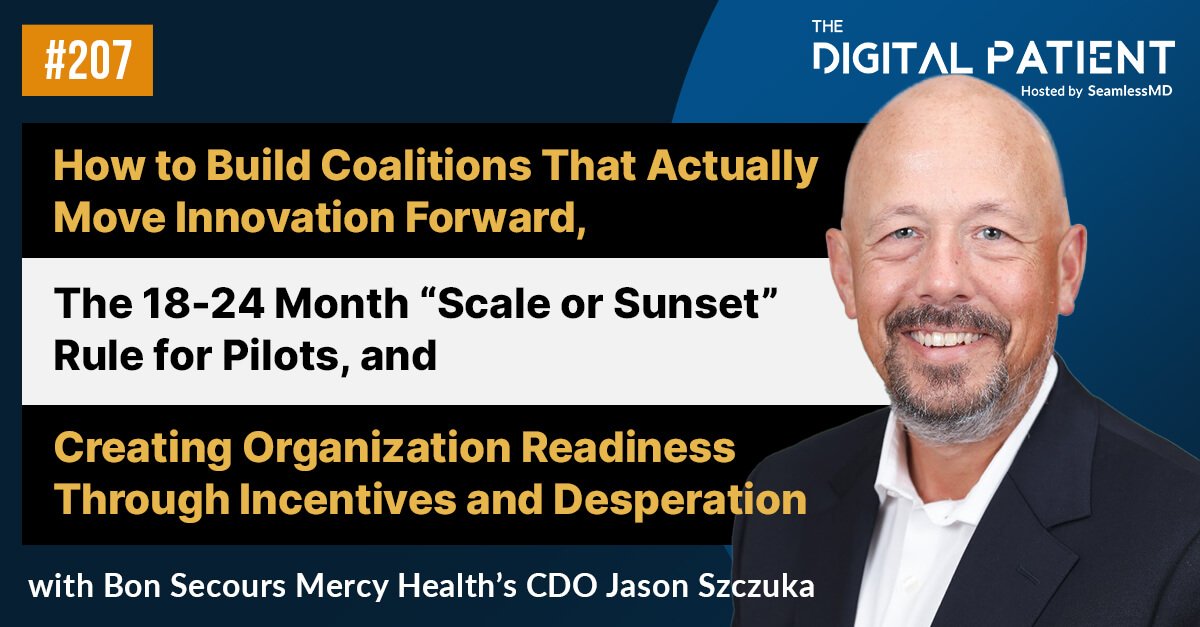
TDP 207: BSMH’s Jason Szczuka: Building Coalitions That Actually Move Innovation Forward, The 18-24 Month “Scale or Sunset” Rule for Pilots, and Creating Organization Readiness Through Incentives and Desperation
December 11, 2025

TDP 207: BSMH’s Jason Szczuka: Building Coalitions That Actually Move Innovation Forward, The 18-24 Month “Scale or Sunset” Rule for Pilots, and Creating Organization Readiness Through Incentives and Desperation

Learn More
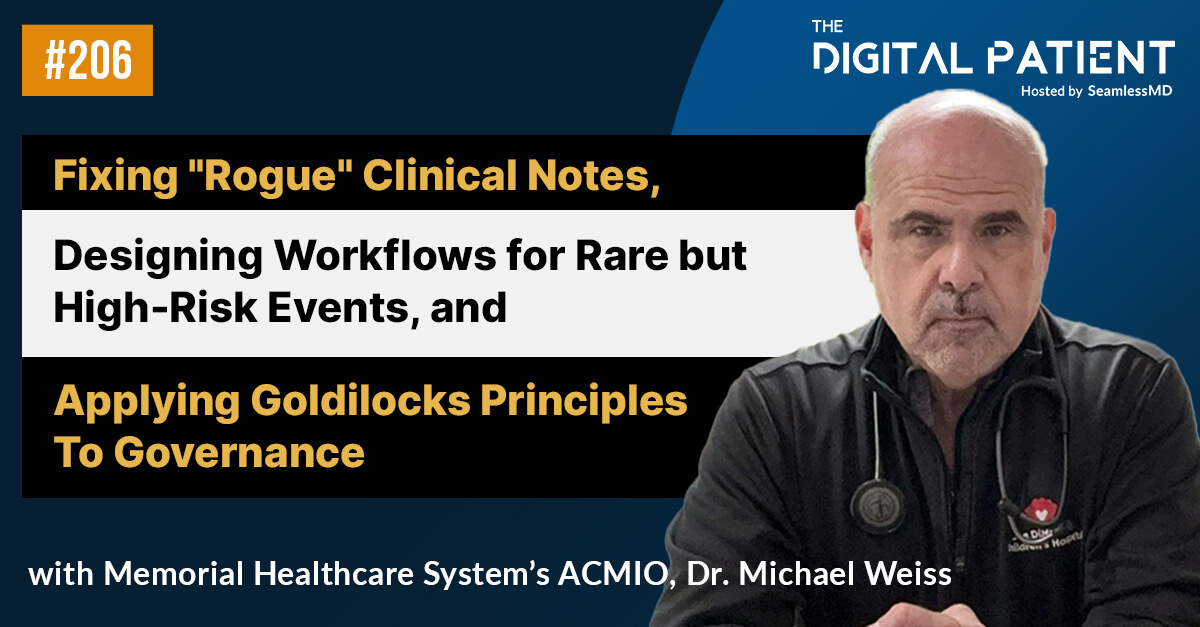
TDP 206: MHS’ ACMIO Dr. Michael Weiss: Fixing "Rogue" Clinical Notes, Designing Workflows for Rare but High-Risk Events, and Applying Goldilocks Principles to Governance
December 9, 2025

TDP 206: MHS’ ACMIO Dr. Michael Weiss: Fixing "Rogue" Clinical Notes, Designing Workflows for Rare but High-Risk Events, and Applying Goldilocks Principles to Governance

Learn More