Ƶ

Thought Leadership

New White Paper: How to Implement Surgical Remote Monitoring in Ontario

August 25, 2021
By

Currently, many healthcare organizations are seeking innovative technology solutions to help combat the surgical backlog due to COVID-19, while also increasing the efficiency and effectiveness of healthcare delivery in Ontario. Evidence suggests that the use of Surgical Remote Monitoring technology, such as Ƶ, has been proven to increase same-day surgeries and


To help you get started with the process of implementing an effective Surgical Remote Monitoring program, we have put together a whitepaper on .

The whitepaper covers topics such as:

  1. Why Surgical Remote Monitoring in Ontario?
  2. Choosing the right technology vendor partner
  3. Identify priority use cases
  4. Establish success criteria
  5. Assemble the team and determine roles & responsibilities
  6. The top 3 workflows for enrolling and monitoring patients
  7. How to construct your communication strategy
  8. How to train your staff, launch your program, and educate patients
  9. What to do after Go-Live & how to achieve on-going success


Many Ontario hospitals have with excellent results, including:

We hope helps you with your Surgical Remote Monitoring journey to help deliver exceptional care to all Ontarians. Please do not hesitate to reach out if you have any questions!
New White Paper: How to Implement Surgical Remote Monitoring in Ontario

Posted by:
on
August 25, 2021

Currently, many healthcare organizations are seeking innovative technology solutions to help combat the surgical backlog due to COVID-19, while also increasing the efficiency and effectiveness of healthcare delivery in Ontario. Evidence suggests that the use of Surgical Remote Monitoring technology, such as Ƶ, has been proven to increase same-day surgeries and


To help you get started with the process of implementing an effective Surgical Remote Monitoring program, we have put together a whitepaper on .

The whitepaper covers topics such as:

  1. Why Surgical Remote Monitoring in Ontario?
  2. Choosing the right technology vendor partner
  3. Identify priority use cases
  4. Establish success criteria
  5. Assemble the team and determine roles & responsibilities
  6. The top 3 workflows for enrolling and monitoring patients
  7. How to construct your communication strategy
  8. How to train your staff, launch your program, and educate patients
  9. What to do after Go-Live & how to achieve on-going success


Many Ontario hospitals have with excellent results, including:

We hope helps you with your Surgical Remote Monitoring journey to help deliver exceptional care to all Ontarians. Please do not hesitate to reach out if you have any questions!

Recent news from Ƶ

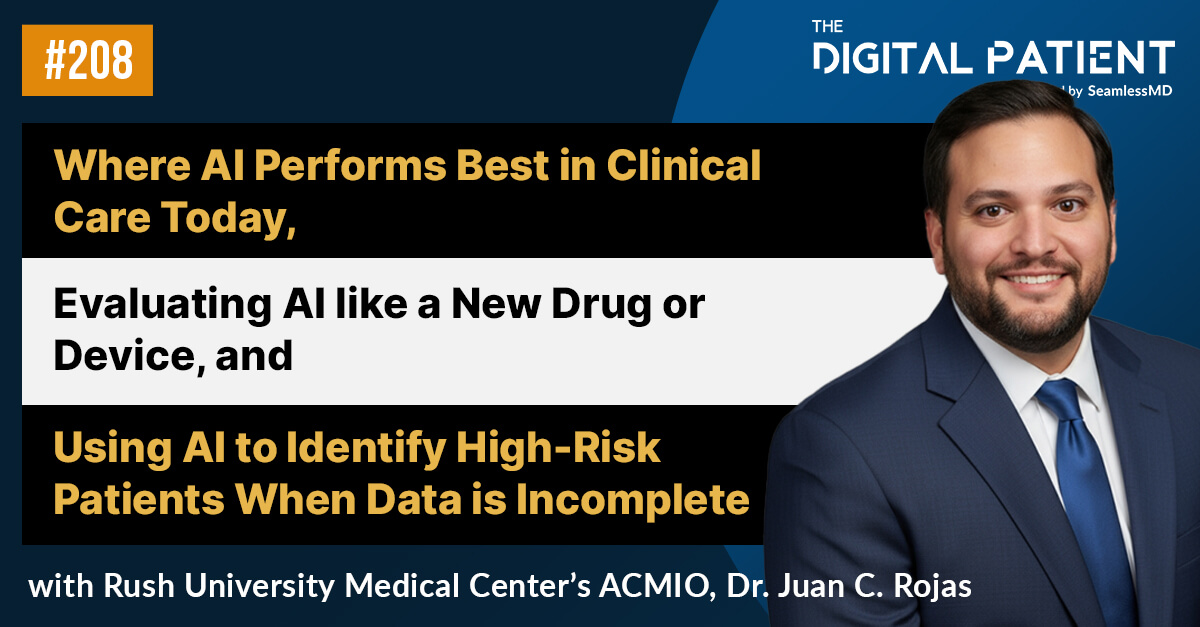
TDP 208: Rush University Medical Center’s ACMIO Dr. Juan C. Rojas: Where AI Performs Best in Clinical Care Today, Evaluating AI like a New Drug or Device, and Using AI to Identify High-Risk Patients When Data is Incomplete
December 16, 2025

TDP 208: Rush University Medical Center’s ACMIO Dr. Juan C. Rojas: Where AI Performs Best in Clinical Care Today, Evaluating AI like a New Drug or Device, and Using AI to Identify High-Risk Patients When Data is Incomplete

Learn More
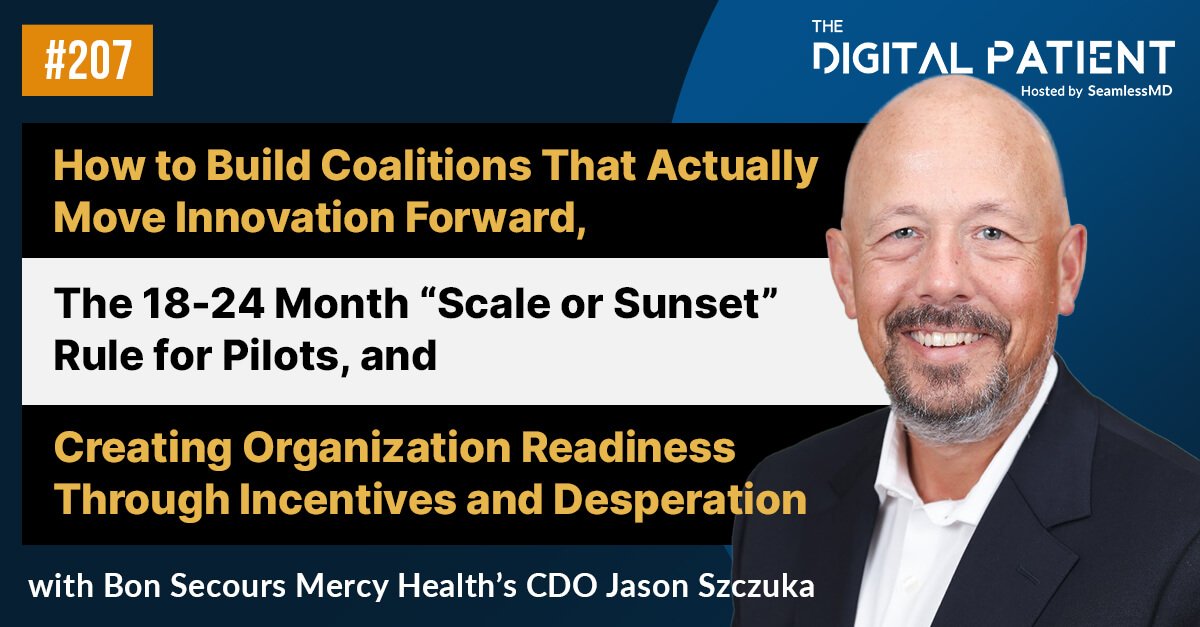
TDP 207: BSMH’s Jason Szczuka: Building Coalitions That Actually Move Innovation Forward, The 18-24 Month “Scale or Sunset” Rule for Pilots, and Creating Organization Readiness Through Incentives and Desperation
December 11, 2025

TDP 207: BSMH’s Jason Szczuka: Building Coalitions That Actually Move Innovation Forward, The 18-24 Month “Scale or Sunset” Rule for Pilots, and Creating Organization Readiness Through Incentives and Desperation

Learn More
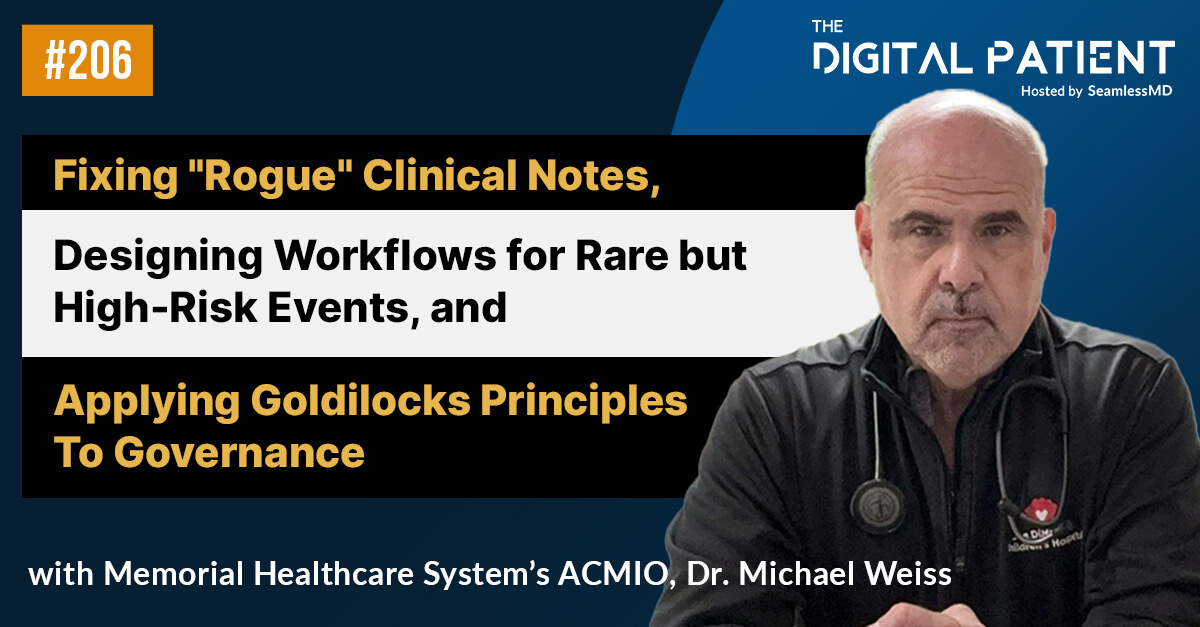
TDP 206: MHS’ ACMIO Dr. Michael Weiss: Fixing "Rogue" Clinical Notes, Designing Workflows for Rare but High-Risk Events, and Applying Goldilocks Principles to Governance
December 9, 2025

TDP 206: MHS’ ACMIO Dr. Michael Weiss: Fixing "Rogue" Clinical Notes, Designing Workflows for Rare but High-Risk Events, and Applying Goldilocks Principles to Governance

Learn More