Ƶ

Healthcare News & Views

Saint Peter's success with Ƶ featured in Home Health Technology News

January 10, 2017
By
joshua

The following excerpt was originally published in the story "” in Home Health Technology News on January 10, 2017:

NEW BRUNSWICK, N.J. – A new surgery recovery program at Saint Peter’s Healthcare System is taking advantage of technology to reduce the length of hospital stays and improve outcomes at home for C-section patients.“This program is improving quality and improving value,” said Dr. Attila Kett, medical director of obstetrical anesthesia at Saint Peter’s. “Technology has been a huge part of the program.”The enhanced recovery after surgery program at Saint Peter’s was modeled after similar programs in Sweden and England. The first patient was enrolled in the program here last August.Saint Peter’s uses Seamless MD’s patient engagement platform to support enrolled patients through preparation, in-hospital care and at-home recovery using reminders, tasks, progress tracking and feedback delivered through their smartphone, tablet or computer.While admitted, patients use a Fitbit clipped to their hospital gown to motivate them to get on their feet and start moving after surgery, and can use a mobile app or computer to stay connected when they go home.Saint Peter’s can track their patients’ progress in real-time, intervene sooner for at-risk patients, and monitor the success of the program using advanced reporting and analytics, even when the patient is at home.“We found that we needed to use multi-media to engage patients before and after their procedures,” said Kett. “Now they can receive information or notifications and text messages, and they get health checks post-surgery at home to review in the cloud-based app every day to report on any temperature or fevers, wound discharge, or any other issues.”Kett said that thanks to the ERAS program most patients are ready to go home on the second day after surgery, a reduction in length of stay by about one day.“With the cloud-based platform it’s really seamless,” said Kett. “We can log in from anywhere and follow the patient to see if there are any risks.”Kett said that a program works because it meets the patients where they are.“This is a generation that really grew up with their cell phone, it’s really like a body part for them,” Kett said. “We need to use that to engage them in their care.”Kett said the hospital plans to expand the program to patients with colorectal and other cancers. He said the hospital has received requests from health care systems in Arkansas and Hawaii for program protocols and information on implementation.
Saint Peter's success with Ƶ featured in Home Health Technology News

Posted by:
joshua
on
January 10, 2017

The following excerpt was originally published in the story "” in Home Health Technology News on January 10, 2017:

NEW BRUNSWICK, N.J. – A new surgery recovery program at Saint Peter’s Healthcare System is taking advantage of technology to reduce the length of hospital stays and improve outcomes at home for C-section patients.“This program is improving quality and improving value,” said Dr. Attila Kett, medical director of obstetrical anesthesia at Saint Peter’s. “Technology has been a huge part of the program.”The enhanced recovery after surgery program at Saint Peter’s was modeled after similar programs in Sweden and England. The first patient was enrolled in the program here last August.Saint Peter’s uses Seamless MD’s patient engagement platform to support enrolled patients through preparation, in-hospital care and at-home recovery using reminders, tasks, progress tracking and feedback delivered through their smartphone, tablet or computer.While admitted, patients use a Fitbit clipped to their hospital gown to motivate them to get on their feet and start moving after surgery, and can use a mobile app or computer to stay connected when they go home.Saint Peter’s can track their patients’ progress in real-time, intervene sooner for at-risk patients, and monitor the success of the program using advanced reporting and analytics, even when the patient is at home.“We found that we needed to use multi-media to engage patients before and after their procedures,” said Kett. “Now they can receive information or notifications and text messages, and they get health checks post-surgery at home to review in the cloud-based app every day to report on any temperature or fevers, wound discharge, or any other issues.”Kett said that thanks to the ERAS program most patients are ready to go home on the second day after surgery, a reduction in length of stay by about one day.“With the cloud-based platform it’s really seamless,” said Kett. “We can log in from anywhere and follow the patient to see if there are any risks.”Kett said that a program works because it meets the patients where they are.“This is a generation that really grew up with their cell phone, it’s really like a body part for them,” Kett said. “We need to use that to engage them in their care.”Kett said the hospital plans to expand the program to patients with colorectal and other cancers. He said the hospital has received requests from health care systems in Arkansas and Hawaii for program protocols and information on implementation.

Recent news from Ƶ

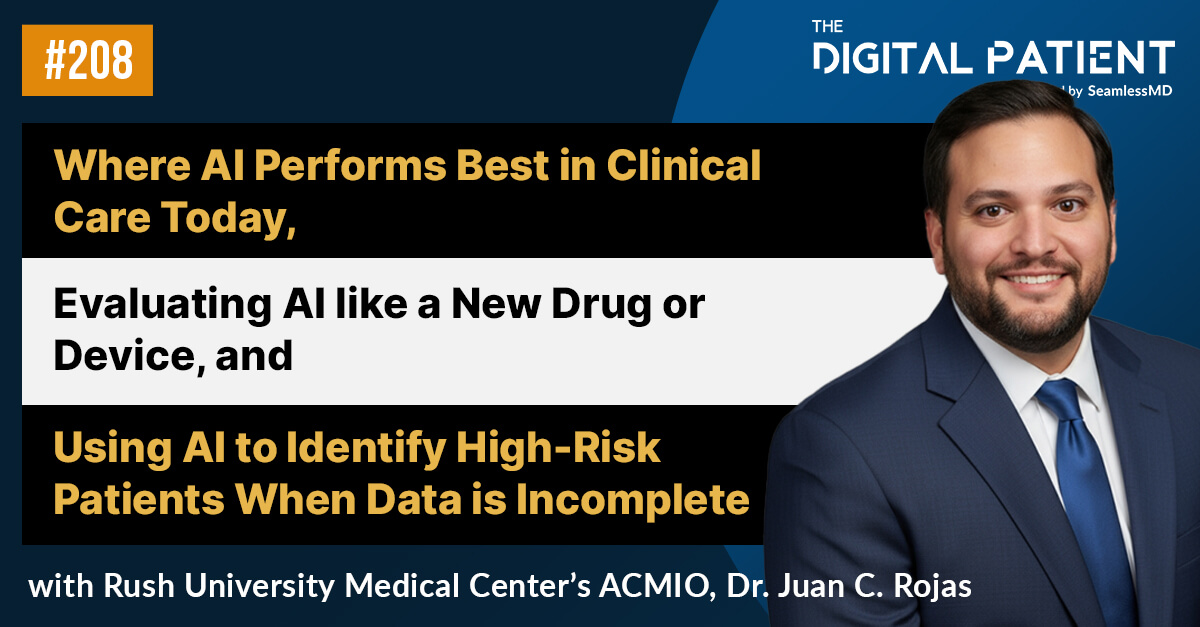
TDP 208: Rush University Medical Center’s ACMIO Dr. Juan C. Rojas: Where AI Performs Best in Clinical Care Today, Evaluating AI like a New Drug or Device, and Using AI to Identify High-Risk Patients When Data is Incomplete
December 16, 2025

TDP 208: Rush University Medical Center’s ACMIO Dr. Juan C. Rojas: Where AI Performs Best in Clinical Care Today, Evaluating AI like a New Drug or Device, and Using AI to Identify High-Risk Patients When Data is Incomplete

Learn More
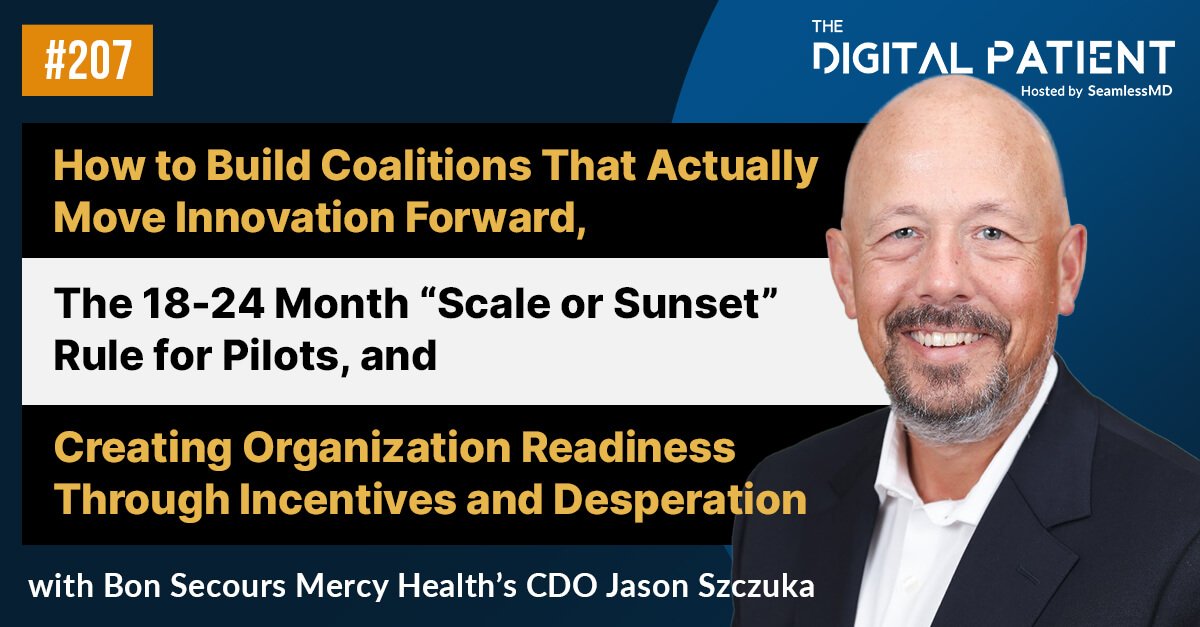
TDP 207: BSMH’s Jason Szczuka: Building Coalitions That Actually Move Innovation Forward, The 18-24 Month “Scale or Sunset” Rule for Pilots, and Creating Organization Readiness Through Incentives and Desperation
December 11, 2025

TDP 207: BSMH’s Jason Szczuka: Building Coalitions That Actually Move Innovation Forward, The 18-24 Month “Scale or Sunset” Rule for Pilots, and Creating Organization Readiness Through Incentives and Desperation

Learn More
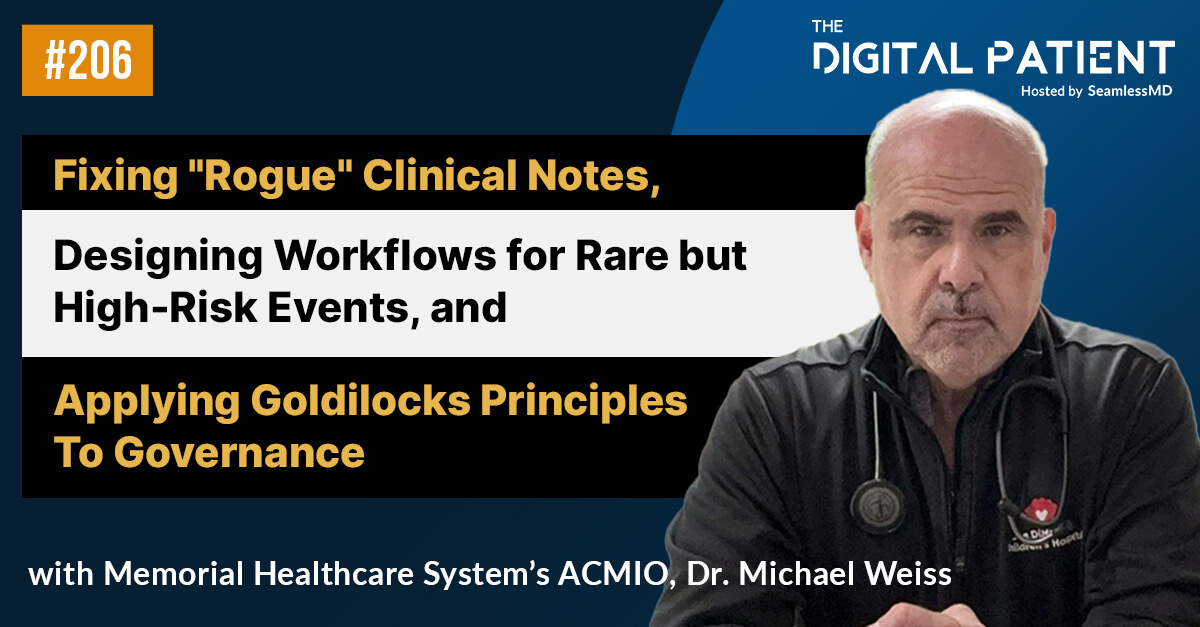
TDP 206: MHS’ ACMIO Dr. Michael Weiss: Fixing "Rogue" Clinical Notes, Designing Workflows for Rare but High-Risk Events, and Applying Goldilocks Principles to Governance
December 9, 2025

TDP 206: MHS’ ACMIO Dr. Michael Weiss: Fixing "Rogue" Clinical Notes, Designing Workflows for Rare but High-Risk Events, and Applying Goldilocks Principles to Governance

Learn More